Hyper-Personalization in Casual Wear: Predicting 2026 Styles
Advertisements
Hyper-personalization in casual wear is rapidly reshaping the fashion landscape, enabling brands to utilize advanced data analytics and artificial intelligence to accurately predict and cater to individual style preferences for 2026 and beyond.
The fashion industry is undergoing a profound transformation, moving beyond broad trends to embrace individual preferences. The concept of hyper-personalization in casual wear is at the forefront of this revolution, utilizing vast amounts of data and advanced analytics to predict future styles and cater to consumers with unprecedented precision. This shift is not merely about offering choices; it’s about anticipating desires and crafting experiences that feel uniquely yours.
The rise of data-driven fashion predictions
The fashion world, once driven by seasonal collections and designer intuition, is increasingly turning to data to inform its creative and commercial strategies. The sheer volume of consumer data available today, from online browsing habits to social media interactions and purchase histories, provides a rich tapestry for brands to understand what resonates with their audience. This data isn’t just about what people bought yesterday; it’s about discerning subtle patterns that hint at tomorrow’s desires, especially in the dynamic realm of casual wear.
Predicting fashion trends for years in advance, like 2026, requires sophisticated algorithms and a deep understanding of cultural shifts. Brands are no longer just reacting to trends; they are actively shaping them through data-informed insights, offering consumers apparel that feels both cutting-edge and deeply personal. This evolution marks a significant departure from traditional mass-market approaches, fostering a closer, more intuitive relationship between consumer and brand.
Leveraging AI for trend forecasting
Artificial intelligence plays a pivotal role in sifting through colossal datasets, identifying nuances that human analysts might miss. AI models can track micro-trends across various demographics and geographical locations, predicting their trajectory and potential impact on broader fashion landscapes. This capability is particularly crucial for casual wear, which is highly influenced by everyday lifestyles and rapid cultural changes.
- Analyzing social media sentiment for emerging styles.
- Predicting fabric and color preferences based on global search queries.
- Identifying shifts in consumer values influencing sustainable fashion choices.
- Forecasting the longevity and adoption rate of new casual wear silhouettes.
The ability of AI to process and interpret these complex data points allows brands to make informed decisions about design, production, and marketing, ensuring their casual wear offerings are not only on-trend but also resonate deeply with individual consumer identities. This precision minimizes waste and maximizes relevance, a win-win for both business and consumer.
Brand spotlight 1: Stitch Fix and algorithmic styling
Stitch Fix stands as a prime example of a brand that has built its entire business model around hyper-personalization in casual wear. Their approach combines human stylists with powerful algorithms to deliver curated clothing selections directly to customers. This blend of technology and human touch creates a highly personalized shopping experience that anticipates individual needs and style evolution.
For 2026, Stitch Fix is refining its predictive capabilities, delving deeper into lifestyle data to understand not just what a customer likes, but why they like it, and how their preferences might shift with life events or changing seasons. Their algorithms analyze hundreds of data points, from fit preferences and sizing to desired occasions and aesthetic leanings, ensuring each ‘fix’ is more accurate and appealing than the last. This iterative learning process is key to their success in a highly competitive market.
The data feedback loop
A crucial element of Stitch Fix’s hyper-personalization strategy is its robust feedback loop. After receiving a ‘fix’, customers provide detailed feedback on each item – what they liked, what they didn’t, and why. This feedback is then fed back into the algorithms, constantly refining their understanding of individual style. This continuous learning allows Stitch Fix to adapt quickly to changing preferences and predict future needs with remarkable accuracy.
- Detailed feedback forms on fit, style, and price.
- Customer style quizzes for initial data collection.
- Analysis of returned items to understand dissatisfaction points.
- Integration of social media likes and saved items for style insights.
By effectively closing this data loop, Stitch Fix not only enhances current customer satisfaction but also gathers invaluable insights that contribute to predicting broader casual wear trends for upcoming years. Their model demonstrates how direct consumer input, when intelligently processed, can drive significant innovation in personalized fashion.

Brand spotlight 2: Nike and bespoke athletic-casual wear
Nike, a global powerhouse in athletic wear, is increasingly applying hyper-personalization techniques to its casual wear lines, predicting 2026 styles with a focus on individual performance and aesthetic desires. Beyond mass-produced sneakers and apparel, Nike is investing heavily in technologies that allow for customized product offerings, responding directly to consumer data and preferences. This includes everything from bespoke shoe designs to personalized apparel suggestions based on activity levels and environmental factors.
Their strategy involves leveraging data from their extensive fitness apps and wearable technology, which collect insights into activity patterns, comfort preferences, and even color choices associated with specific moods or performance goals. This rich, first-party data allows Nike to move beyond generic segmentation, offering casual wear solutions that feel uniquely tailored to each individual’s lifestyle and aspirations. The future of Nike casual wear is not just about comfort and style; it’s about empowering personal expression through data-driven design.
Nike By You and digital customization
The ‘Nike By You’ platform is a testament to their commitment to personalization, allowing customers to design their own shoes and select specific colors, materials, and even personalized text. This platform provides Nike with direct insights into emerging color combinations, material preferences, and design elements that resonate most with their audience. The immense popularity of ‘Nike By You’ generates a wealth of data that feeds directly into their trend forecasting models for casual wear.
- User-generated design data informing future color palettes.
- Popular material choices revealing consumer comfort priorities.
- Demand for specific design features guiding product development.
- Regional customization trends influencing localized casual wear collections.
By empowering consumers to become co-creators, Nike not only fosters a sense of ownership and loyalty but also gains unparalleled access to real-time design preferences. This data-driven approach positions them uniquely to predict and lead casual wear trends, ensuring their 2026 offerings are perfectly aligned with consumer desires.
Brand spotlight 3: Zara and rapid response personalization
Zara, known for its agile supply chain and ability to quickly adapt to fashion trends, is now integrating hyper-personalization into its casual wear strategy. While traditionally focused on speed to market, Zara is increasingly using data analytics to predict micro-trends and personalize inventory at a regional and even store level. This allows them to stock casual wear items that are highly likely to appeal to specific local customer bases, minimizing unsold inventory and maximizing customer satisfaction.
Their approach to predicting 2026 casual wear styles involves sophisticated analysis of point-of-sale data, online browsing behavior, and social media buzz, all in near real-time. This rapid feedback loop allows Zara to identify emerging preferences for cuts, fabrics, and prints, then quickly design, manufacture, and distribute these items to the most relevant markets. The result is a highly responsive system that feels personalized to the consumer, even within a fast-fashion model.
AI-driven inventory and display optimization
Zara’s use of AI extends to optimizing store layouts and online product displays. By understanding what customers are looking for and how they interact with products, Zara can personalize the shopping experience. This might involve recommending specific casual outfits online or arranging store displays to highlight items predicted to be popular in that particular location. This level of granular personalization ensures that consumers are presented with options that align closely with their individual and local preferences.
- Predicting regional demand for specific casual wear items.
- Optimizing online recommendations based on individual browsing history.
- Tailoring in-store product placement to local demographic data.
- Using sales data to inform material and color choices for future collections.
Zara’s model exemplifies how speed and data can combine to create a personalized experience, ensuring that their casual wear collections for 2026 are not only fashionable but also precisely targeted to consumer desires, reducing waste and increasing efficiency.
The technological backbone of hyper-personalization
Behind the seamless experience of hyper-personalization lies a complex technological infrastructure. This includes advanced data analytics platforms, machine learning algorithms, and robust cloud computing capabilities. These technologies enable brands to collect, process, and interpret vast quantities of consumer data, transforming raw information into actionable insights that drive design, production, and marketing decisions for casual wear.
The ability to integrate data from diverse sources – from e-commerce platforms and social media to in-store sensors and loyalty programs – is crucial. This unified view of the customer allows for a holistic understanding of their preferences, behaviors, and even their emotional responses to different styles. As we look towards 2026, the sophistication of these technologies will only increase, leading to even more precise and predictive personalization in casual wear.
Emerging technologies shaping fashion’s future
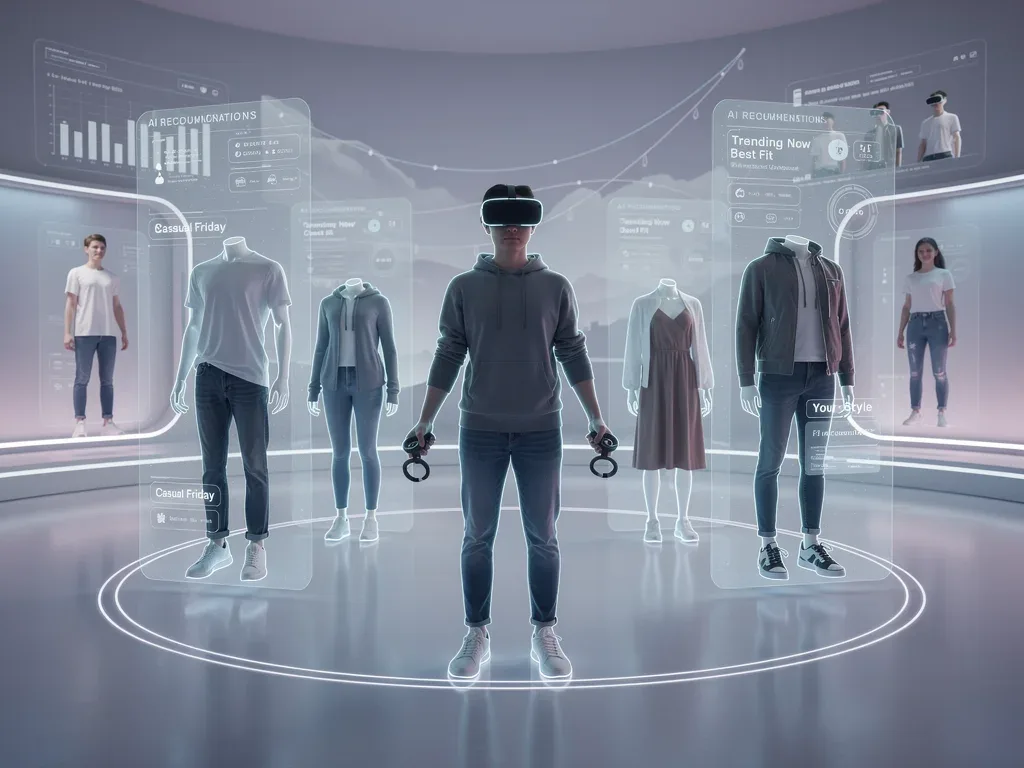
Beyond current AI and data analytics, several other technologies are poised to further enhance hyper-personalization in casual wear. These include augmented reality (AR) for virtual try-ons, allowing customers to visualize garments on themselves before purchase, and blockchain for supply chain transparency, appealing to ethically conscious consumers. These innovations contribute to a more immersive and trustworthy personalized shopping journey.
- Augmented reality for virtual try-on experiences.
- 3D printing for custom-fit casual wear components.
- Blockchain for transparent sourcing and ethical production.
- Wearable tech integration for real-time style recommendations.
These emerging technologies are not just gadgets; they are integral tools that will allow brands to offer unprecedented levels of customization and responsiveness in casual wear. By 2026, many of these will be standard features, further blurring the lines between mass production and bespoke fashion, making every casual wear item feel individually crafted.
Ethical considerations and the future of personalized fashion
While hyper-personalization offers immense benefits, it also raises important ethical considerations, particularly concerning data privacy and consumer autonomy. Brands must navigate the fine line between utilizing data to enhance customer experience and respecting individual privacy. Transparency in data collection and usage, along with robust security measures, will be paramount for maintaining consumer trust as personalization becomes more pervasive in casual wear.
The future of personalized fashion in 2026 will likely see a greater emphasis on ethical AI and responsible data practices. Consumers are becoming increasingly aware of their digital footprint, and brands that prioritize privacy and empower consumers with control over their data will gain a significant competitive advantage. The goal is to create a personalized experience that feels empowering, not intrusive, fostering a symbiotic relationship where data benefits both the brand and the consumer.
Building trust in data-driven fashion
Trust is the cornerstone of any successful personalized strategy. Brands must clearly communicate how customer data is used to enhance their casual wear offerings and demonstrate a commitment to protecting that data. This includes providing clear opt-in and opt-out options, explaining data retention policies, and ensuring that personalization efforts truly add value rather than simply pushing products.
- Transparent data privacy policies and user agreements.
- Empowering consumers with control over their personal data.
- Ensuring data security through advanced encryption and protocols.
- Focusing personalization on genuine value addition, not just sales.
Ultimately, the success of hyper-personalization in casual wear for 2026 and beyond will hinge on a brand’s ability to balance technological innovation with ethical responsibility. Brands that embody this balance will not only predict trends but also build lasting relationships with a discerning consumer base, redefining what it means to be fashionable and responsible.
| Key Aspect | Brief Description |
|---|---|
| Data-Driven Forecasting | Utilizing AI and big data to predict casual wear trends and individual preferences for 2026. |
| Brand Strategies | Stitch Fix, Nike, and Zara exemplify diverse approaches to hyper-personalization in casual wear. |
| Technological Foundation | Advanced analytics, machine learning, and emerging tech like AR drive personalization. |
| Ethical Considerations | Balancing data utilization with privacy and consumer trust is crucial for future success. |
Frequently asked questions about personalized casual wear
What is hyper-personalization in casual wear?▼Hyper-personalization in casual wear refers to the use of advanced data analytics and AI to predict individual fashion preferences and deliver highly tailored product recommendations or custom designs. It goes beyond basic segmentation, focusing on unique consumer data to offer a truly bespoke experience.
How do brands predict 2026 casual wear styles?▼Brands predict 2026 casual wear styles by analyzing vast amounts of data from online browsing, social media, purchase history, and direct feedback. AI algorithms identify emerging trends, consumer sentiment, and lifestyle shifts, allowing for proactive design and inventory decisions.
Which brands are leading in casual wear hyper-personalization?▼Leading brands like Stitch Fix, Nike, and Zara are at the forefront of hyper-personalization in casual wear. Stitch Fix uses algorithmic styling, Nike offers bespoke athletic-casual options, and Zara leverages rapid response personalization for localized inventory and displays, all driven by data.
What role does AI play in personalized fashion?▼AI is crucial for processing and interpreting complex consumer data, identifying micro-trends, and predicting future fashion preferences. It enables brands to automate recommendations, optimize inventory, and even assist in design processes, making personalization scalable and highly accurate.
What are the ethical concerns with hyper-personalization?▼Ethical concerns include data privacy, security, and consumer autonomy. Brands must ensure transparency in data collection, provide clear opt-out options, and prioritize responsible data practices to build and maintain trust with consumers in the increasingly personalized fashion landscape.
Conclusion
The journey towards hyper-personalization in casual wear is not merely a fleeting trend but a fundamental shift in how fashion operates. As brands like Stitch Fix, Nike, and Zara continue to push the boundaries of data-driven insights and AI, the casual wear landscape for 2026 promises to be one where individual style is not just acknowledged but anticipated and celebrated. This evolution demands a delicate balance between technological innovation and ethical responsibility, ensuring that while fashion becomes more personal, it also remains respectful of consumer privacy and choice. The future of casual wear is undoubtedly personalized, offering an exciting era where every garment feels uniquely designed for you.