Retro Runners vs. Court Classics: 8-Hour Comfort Data
Advertisements
New research on footwear comfort provides useful context for the debate around Retro Runners vs. Court Classics: Comfort Comparison for 8-Hour Casual Daily Wear, but it does not establish a universal winner across all models and wearers.
Comfort depends on multiple factors, including fit, shoe weight, midsole softness, upper construction, flexibility, foot shape, walking volume, and individual preference.
For consumers choosing casual footwear, the most useful comparison is therefore based on typical design characteristics rather than unsupported claims that one category always performs better after eight hours.
Understanding Comfort Metrics for Daily Wear
Footwear comfort is a complex concept that includes both subjective perception and measurable factors such as pressure distribution, shoe weight, cushioning, temperature, and fit.
Research has used visual comfort scales, plantar-pressure measurements, gait analysis, and mechanical testing to study how shoe design influences the wearer.
However, differences in study methods, footwear types, activities, and participants make it difficult to translate laboratory findings into one simple rule for all-day casual wear.
Cushioning and Impact Attenuation
Midsole cushioning affects how forces are transmitted between the ground and the foot during walking, although more cushioning does not automatically mean greater comfort for every person.
Retro-inspired running shoes often use thicker foam midsoles because their designs originated in athletic footwear, while many classic court shoes use thinner or firmer sole constructions.
This can make some retro runners feel softer during prolonged walking, but actual comfort depends on the specific foam, geometry, fit, and preferences of the wearer.
Midsole softness can influence perceived comfort and walking mechanics.
Thicker cushioning may reduce some loading measures but is not universally preferable.
Model-specific construction matters more than the category name alone.
Arch Support and Stability
Arch support is often marketed as an essential comfort feature, but research does not show that greater built-in arch support is universally better for healthy people.
Some retro runners use shaped footbeds, heel counters, or structured midsoles, while many traditional court shoes have relatively flat internal platforms.
The better option depends on foot anatomy, fit, existing symptoms, and whether the wearer actually finds the support comfortable during normal walking.
Support requirements vary substantially between individuals.
Some people prefer structured midsoles, while others prefer flatter shoes.
Persistent foot pain should not be solved solely by choosing a shoe category.
Material Science: Breathability, Flexibility, and Durability
Upper materials influence heat, moisture, flexibility, fit, and the way a shoe adapts to the foot during extended use.
Retro runners often combine mesh and synthetic overlays, while court classics frequently use leather, synthetic leather, suede, or combinations of these materials.
Neither construction is inherently superior, but mesh-heavy designs generally allow more airflow, while leather-based shoes may offer a different balance of structure, durability, and weather resistance.
Weight Distribution and Ergonomics
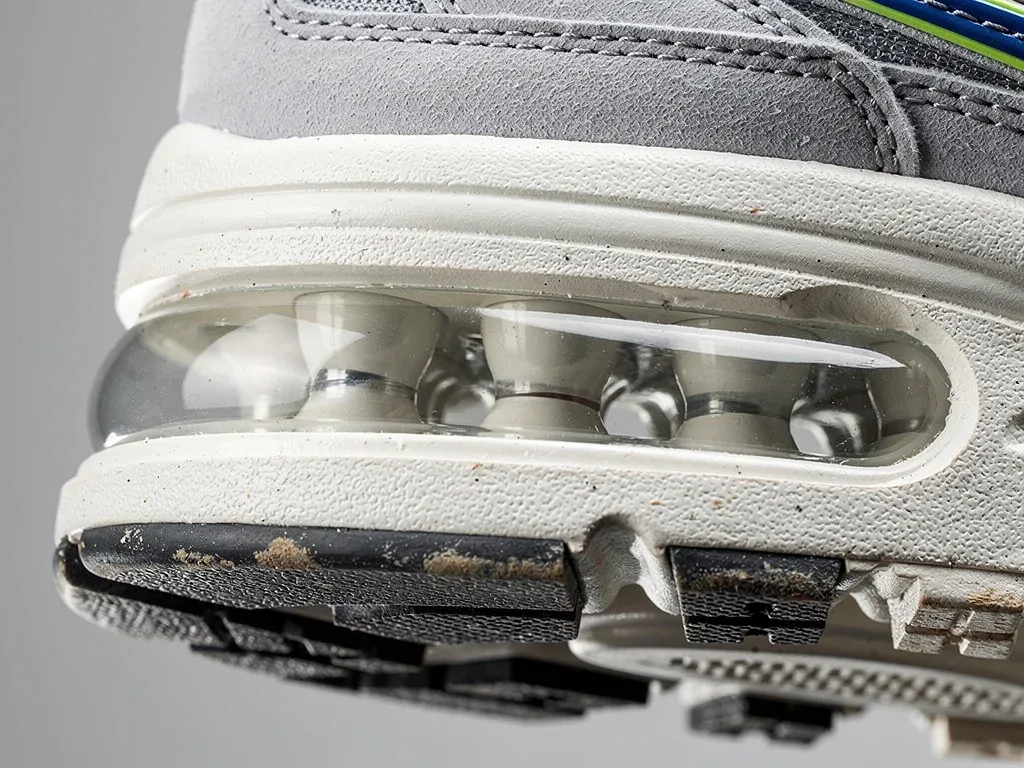
Shoe weight can influence perceived effort and comfort, particularly when a person walks or stands for many hours.
A major review of footwear comfort found that lighter, well-fitting shoes with soft midsoles were generally perceived as more comfortable across the literature, although individual responses still varied.
Toe-box shape, heel fit, pressure points, collar design, and overall sizing can therefore be just as important as cushioning technology.
Lower shoe weight may reduce the feeling of heaviness during extended wear.
Adequate toe space can reduce unwanted pressure on the forefoot.
Secure heel fit can help limit friction and movement inside the shoe.
What the Research Actually Says About Sustained Comfort
There is evidence that footwear design can change plantar pressure, gait mechanics, and perceived comfort, but the research does not establish that all retro runners outperform all court classics over an eight-hour period.
For example, studies have shown that modifying heel-to-toe drop can alter pressure distribution and comfort after walking, demonstrating how relatively small design changes can affect the experience.
This supports comparing individual shoes rather than assuming every model within one visual category will behave the same way.
Pressure Mapping Does Not Produce a Simple Winner
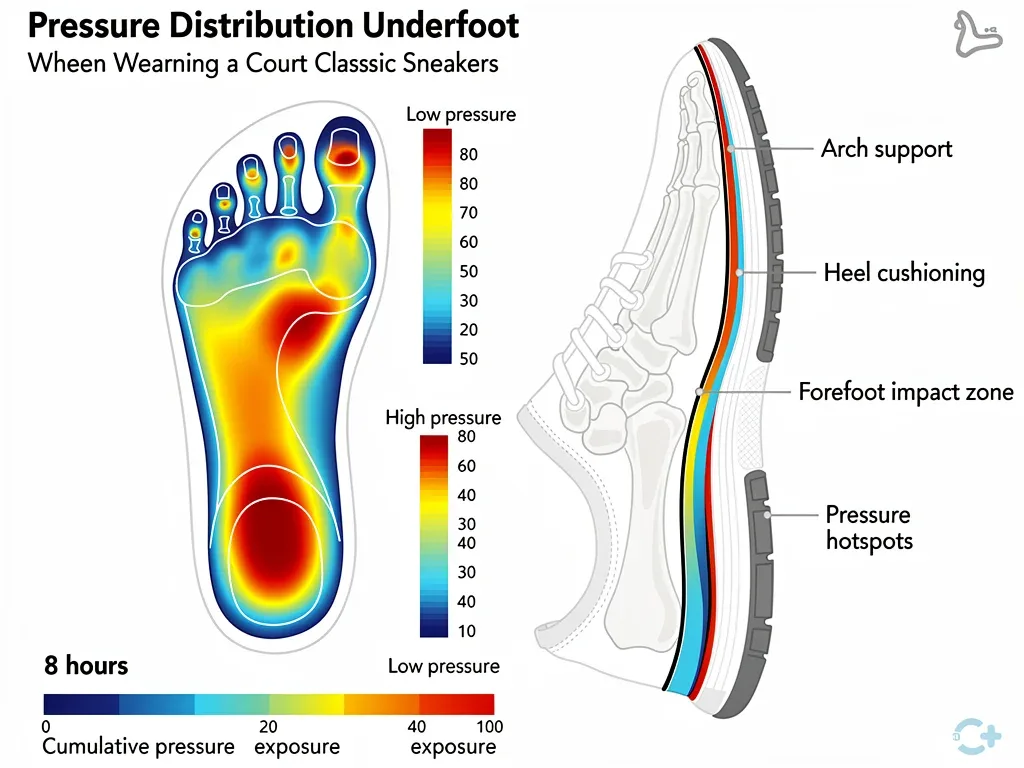
Pressure measurement is useful for studying where forces occur under the foot, but lower peak pressure does not always correspond directly to higher perceived comfort.
Research on casual footwear has found relationships between some force measurements and comfort while also showing that several commonly measured pressure variables did not consistently predict what participants found comfortable.
This is one reason a visually similar shoe can feel excellent to one wearer and uncomfortable to another.
Typical Strengths of Retro Runners
Retro runners often inherit features from performance footwear, including layered midsoles, padded collars, flexible forefeet, and textile-heavy uppers.
For users who spend much of the day walking, these characteristics may provide a softer and lighter experience than some low-profile court sneakers.
That is a useful design tendency, but it should not be converted into a claim that every retro runner delivers better eight-hour comfort.
Who May Prefer Retro Runners
People who prefer softer underfoot cushioning and lighter uppers may find retro runners more comfortable for long periods of casual walking.
They can also suit people who prefer a more athletic silhouette or who regularly move between commuting, errands, and other active situations.
Actual suitability still depends on heel fit, toe room, midsole geometry, and whether the specific model matches the wearer's foot shape.
Typical Strengths of Court Classics
Court classics commonly use broad, stable platforms and relatively simple sole constructions derived from tennis, basketball, or other court-sport designs.
Some wearers prefer the firmer ground feel and lower-profile geometry because it feels stable and predictable during casual standing and walking.
Modern court-inspired sneakers also vary considerably, with some models adding softer foam, improved insoles, perforations, and more flexible materials.
Who May Prefer Court Classics
People who dislike thick or soft cushioning may prefer the firmer sensation of a classic court shoe.
The clean appearance can also integrate easily with casual style where a running-inspired silhouette may feel too sporty.
For prolonged wear, trying the shoe with the same socks and walking conditions expected in daily life is more informative than relying on category assumptions.
Fit May Matter More Than Shoe Category
Research on footwear comfort repeatedly emphasizes the importance of fit, because pressure or friction can outweigh the benefit of otherwise sophisticated cushioning.
A shoe that is too narrow, too short, unstable at the heel, or poorly matched to the wearer's foot can become uncomfortable regardless of whether it is marketed as a runner or court sneaker.
Trying multiple sizes and paying attention to toe space, heel movement, width, and pressure points can therefore improve the purchasing decision.
Initial Comfort vs. Longer Wear
A shoe that feels soft during the first few minutes is not guaranteed to remain comfortable after several hours.
Research has shown that perceived comfort and plantar-pressure patterns can change after extended walking, even within the same shoe.
When possible, consumers should buy from retailers with practical return policies and test shoes indoors before committing them to a full day of wear.
Breathability and Heat Management
Heat and moisture can contribute to discomfort during prolonged wear, especially in warm environments or during frequent walking.
Mesh and textile panels generally permit more ventilation than solid leather constructions, although lining, socks, perforations, and overall upper design also matter.
Consumers who experience hot feet may therefore benefit from comparing upper materials in addition to focusing on cushioning.
Leather Is Not Automatically Uncomfortable
Leather and synthetic leather can feel warmer than open mesh, but they may soften and adapt with use depending on the material and construction.
Perforations, textile linings, thinner panels, and appropriate socks can also improve the experience of wearing court-style shoes for longer periods.
Breathability should therefore be assessed at the individual model level rather than treated as a fixed limitation of the entire court category.
Emerging Trends in Casual Footwear
Modern casual footwear increasingly mixes athletic and lifestyle design, making the traditional distinction between runner and court sneaker less precise.
Brands now place soft foams, improved insoles, lightweight materials, and flexible constructions inside silhouettes that would once have been considered purely court inspired.
Likewise, retro runners are often redesigned primarily for lifestyle use rather than reproducing the exact performance construction of the original athletic shoe.
The Hybridization of Footwear Design
Hybrid footwear combines visual cues from classic sneakers with cushioning or construction techniques borrowed from modern athletic shoes.
This can provide more options for consumers who want a cleaner appearance without choosing a very firm or minimally cushioned sole.
The growing overlap between categories also makes model-specific testing increasingly important when comparing Retro Runners vs. Court Classics: Comfort Comparison for 8-Hour Casual Daily Wear.
Lifestyle shoes increasingly borrow technologies from performance footwear.
Court-inspired silhouettes may now include softer midsoles and improved insoles.
Visual category alone is becoming a weaker predictor of comfort.
Making an Informed Choice for Daily Comfort
There is no scientifically established rule that every retro runner is more comfortable than every court classic for eight hours of casual daily wear.
Retro runners often provide softer cushioning, lower weight, and more textile ventilation, while court classics may offer a firmer platform and a different fit that some wearers prefer.
The most reliable choice is the shoe that fits properly, creates no troublesome pressure points, suits the intended activity, and remains comfortable during extended real-world wear.
A Practical In-Store Comfort Check
Walk in both shoes for several minutes and pay attention to heel slipping, toe pressure, arch irritation, forefoot width, and any rubbing around the collar.
Compare the shoes using the socks you normally wear and avoid assuming that a tight shoe will necessarily stretch enough to become comfortable.
If one model immediately creates numbness, sharp pressure, or persistent pain, a different size, width, or shoe is usually a better option than trying to tolerate it.
Comfort Aspect | Typical Category Difference |
|---|---|
Cushioning | Retro runners often use thicker or softer midsoles, but comfort varies by model and wearer. |
Arch Support | Support varies widely in both categories and more support is not automatically better for everyone. |
Breathability | Mesh-heavy retro runners often ventilate more than solid leather court shoes, although construction varies. |
Weight and Flexibility | Retro runners are often lighter, while some court classics use denser and firmer constructions. |
Most Important Factor | Proper fit and individual comfort are more important than category labels alone. |
Frequently Asked Questions About Casual Footwear Comfort
Which type of shoe is more comfortable for eight hours of casual wear? ▼
There is no universal winner. Retro runners often have softer cushioning and lighter uppers, but individual fit and model-specific design are stronger predictors of comfort than the category name alone.
Do court classics offer comfort advantages? ▼
Yes. Some wearers prefer their firmer platforms, lower-profile geometry, and stable feel, especially when the shoe fits the foot well.
Does more cushioning always mean more comfort? ▼
No. Softer midsoles are often perceived as comfortable, but cushioning preference varies, and excessive softness or unsuitable geometry can also feel unstable or uncomfortable to some users.
Can aftermarket insoles improve court classics? ▼
They may improve comfort for some users if there is enough internal space and the insole fits correctly, but adding an insert is not guaranteed to solve poor sizing or an unsuitable shoe shape.
How important are materials for all-day wear? ▼
Materials affect ventilation, flexibility, weight, and pressure against the foot, so upper construction can have a meaningful impact on comfort during prolonged wear.
Looking Ahead: The Evolving Landscape of Casual Footwear Comfort
The Retro Runners vs. Court Classics: Comfort Comparison for 8-Hour Casual Daily Wear is becoming less clear-cut as brands increasingly combine athletic cushioning with lifestyle-focused silhouettes.
Research supports paying attention to fit, weight, midsole feel, pressure distribution, and task-specific needs, but current evidence does not justify declaring one entire sneaker category scientifically superior for an eight-hour day.
As casual footwear continues to evolve, consumers are likely to benefit most from comparing individual models and choosing the option that remains comfortable on their own feet.