Smart Fabrics for Everyday: Enhancing Comfort & Performance
Advertisements
Smart fabrics for everyday are revolutionizing casual outfits by integrating cutting-edge technologies that enhance comfort, performance, and functionality, transforming how we interact with our clothing on a daily basis.
Imagine a world where your clothes not only look good but actively work to improve your day. This isn’t science fiction; it’s the reality brought forth by smart fabrics for everyday wear. These innovative textiles are rapidly moving from specialized athletic gear and medical applications into our casual wardrobes, promising a future where comfort, performance, and style converge seamlessly.
The Dawn of Smart Textiles in Casual Wear
The integration of advanced technology into textiles represents a significant leap in material science. Smart fabrics are no longer just about aesthetics; they are about functionality that enhances our daily lives, making clothing more responsive to our environment and personal needs.
Historically, textiles served basic purposes: warmth, protection, and modesty. With the advent of smart fabrics, this paradigm has shifted dramatically. Our clothes can now regulate temperature, monitor health, and even interact with digital devices, all while maintaining the look and feel of traditional garments. This evolution is particularly exciting for casual wear, where comfort and versatility are paramount.
Beyond Basic Functionality
Modern consumers expect more from their clothing. They seek garments that can adapt to changing weather, provide sustained comfort throughout long days, and offer practical benefits beyond just covering the body. Smart fabrics answer this call by offering solutions that were once unimaginable.
- Adaptive Comfort: Textiles that adjust to body temperature.
- Enhanced Durability: Fabrics designed to resist wear and tear.
- Personalized Experience: Clothing that responds to individual needs.
The potential impact of these advancements on the casual clothing market is immense, promising a future where our outfits are not just passive items but active partners in our daily routines. This section sets the stage for exploring specific technologies transforming everyday apparel.
Temperature-Regulating Fabrics: Your Personal Climate Control
One of the most immediate and appreciated benefits of smart fabrics is their ability to regulate temperature. These textiles are engineered to keep you comfortable regardless of external conditions, making them ideal for casual wear that transitions between indoor and outdoor environments, or across varying climates.
Traditional fabrics often trap heat or offer minimal insulation, leading to discomfort. Smart temperature-regulating fabrics, however, utilize a range of technologies to actively manage heat. This can involve phase-change materials (PCMs), which absorb and release heat as needed, or advanced wicking structures that move moisture away from the body to facilitate evaporative cooling.
How They Work: Phase-Change Materials (PCMs)
PCMs are substances that store and release large amounts of latent heat during phase transitions, typically melting and freezing. When incorporated into fabric fibers, they can create a microclimate around the body. If your body temperature rises, the PCM melts, absorbing excess heat. Conversely, if your body temperature drops, the PCM solidifies, releasing stored heat to keep you warm.
- Heat Absorption: PCMs absorb heat when body temperature increases.
- Heat Release: PCMs release heat when body temperature decreases.
- Dynamic Comfort: Maintains a stable microclimate around the wearer.
This dynamic regulation means fewer wardrobe changes and greater comfort throughout the day, whether you’re commuting, working in an office, or enjoying a leisurely stroll. The application of these materials in casual clothing means you can wear a single garment that adapts to different situations, reducing the need for layering or shedding clothes.
Moisture-Wicking and Quick-Drying Textiles: Staying Fresh All Day
Beyond temperature regulation, managing moisture is crucial for comfort, especially in casual clothing worn during active periods or in humid conditions. Smart moisture-wicking and quick-drying fabrics are designed to draw sweat away from the skin and disperse it across the fabric’s surface, where it can evaporate more rapidly.
These fabrics achieve their performance through unique fiber structures and chemical treatments. Synthetic fibers like polyester and nylon are often engineered with capillary action in mind, featuring micro-grooves or channels that effectively transport moisture. Natural fibers can also be treated or blended to enhance their wicking capabilities.
The Science of Wicking
The effectiveness of a moisture-wicking fabric lies in its ability to move liquid from a high-humidity area (your skin) to a lower-humidity area (the fabric surface) and then to the air. This process relies on surface tension and capillary action, where liquid is pulled along the fibers. Quick-drying properties are often a natural consequence of efficient wicking, as the dispersed moisture has a larger surface area to evaporate from.
- Capillary Action: Fibers draw moisture away from the skin.
- Evaporative Cooling: Moisture spreads and evaporates quickly.
- Odor Control: Reduced moisture means less environment for bacteria growth.
For casual wear, this technology means staying drier and more comfortable during everyday activities, from running errands to a brisk walk. It also contributes to better hygiene by preventing the buildup of sweat and reducing the potential for unpleasant odors, ensuring you feel fresh throughout your day.
Self-Cleaning and Stain-Resistant Fabrics: Effortless Maintenance
Imagine a shirt that repels coffee spills or a pair of pants that stay clean for longer, reducing the frequency of laundry. Self-cleaning and stain-resistant fabrics are bringing this convenience to everyday wear, revolutionizing garment care and extending the lifespan of clothing. These technologies employ various mechanisms, from hydrophobic coatings to photocatalytic processes.
Stain resistance is primarily achieved through surface treatments that create a barrier, preventing liquids from penetrating the fabric fibers. These treatments often make the fabric hydrophobic, causing water and oil-based liquids to bead up and roll off. Self-cleaning properties take this a step further, using light or other environmental factors to break down dirt and odors.
Nanotechnology for Cleaner Clothes
Many self-cleaning fabrics utilize nanotechnology, where materials are engineered at the molecular level. For instance, some fabrics incorporate titanium dioxide nanoparticles, which, when exposed to sunlight, act as a photocatalyst. This process breaks down organic stains and odors into harmless byproducts, essentially cleaning the garment itself. Other innovations focus on creating surfaces that are so microscopically structured that dirt cannot adhere to them.
- Hydrophobic Coatings: Repel liquids and prevent stains.
- Photocatalytic Action: Breaks down organic matter with light.
- Reduced Laundry: Less frequent washing saves water and energy.
The practical benefits for casual wear are immense. Less time spent on laundry, fewer stained garments, and a longer garment life contribute to a more sustainable and convenient wardrobe. This technology is particularly appealing for busy individuals who want to maintain a polished appearance with minimal effort.
Wearable Sensors and Biometric Integration: Health at Your Fingertips
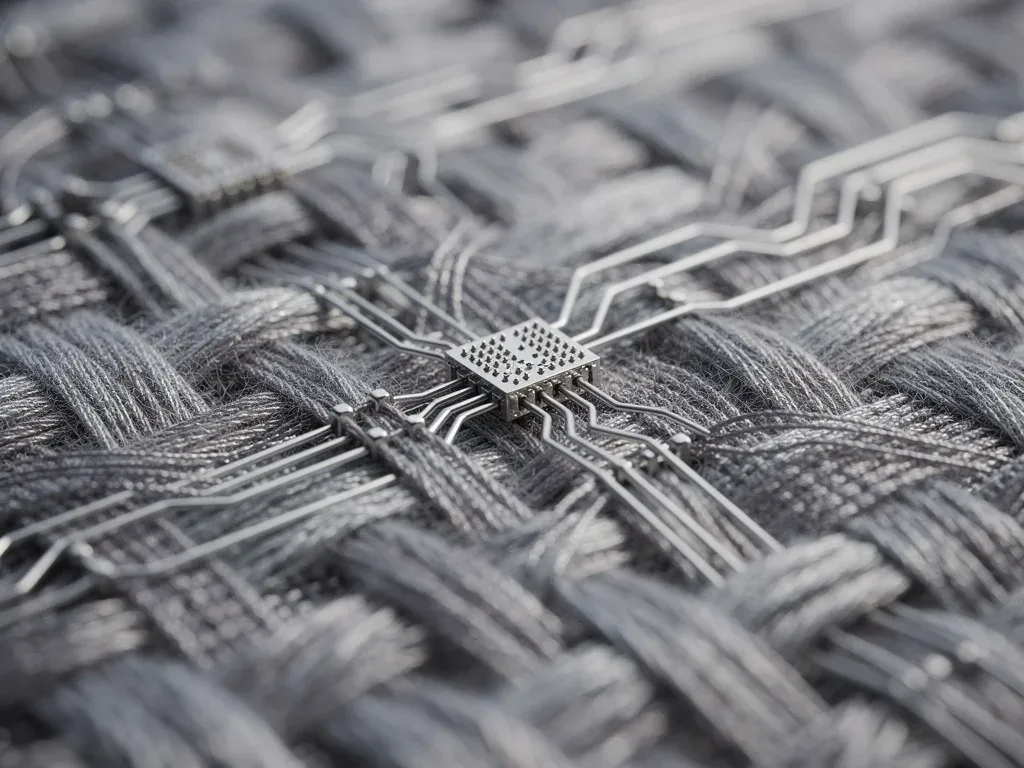
The convergence of fashion and health monitoring is perhaps one of the most exciting frontiers in smart fabrics. Integrating miniature sensors directly into casual apparel allows for continuous, unobtrusive monitoring of various biometric data, transforming everyday clothing into a personal health assistant.
These integrated sensors can track heart rate, respiration, activity levels, and even sleep patterns, all without the need for bulky wearables. The data collected can then be transmitted wirelessly to smartphones or other devices, providing users with real-time insights into their well-being. The subtlety of these integrations means that the clothing still looks and feels like regular apparel.
Beyond Fitness Trackers
While fitness trackers are common, smart fabrics take biometric monitoring to a new level by embedding the technology seamlessly into clothing. This allows for more natural and continuous data collection, as the garment is in constant contact with the body. Imagine a t-shirt that alerts you to signs of stress, or a pair of socks that monitor your circulation.
- Heart Rate Monitoring: Continuous tracking during daily activities.
- Activity Tracking: Steps, calories, and movement patterns.
- Posture Correction: Garments that provide subtle feedback.
For individuals keen on understanding their health better, or those with specific medical conditions, this technology offers a discreet and convenient way to stay informed. It blurs the line between clothing and personal health device, making health monitoring an effortless part of daily life.
Adaptive Fit and Stretch Fabrics: Unrestricted Movement
Comfort in casual wear is intrinsically linked to freedom of movement. Smart fabrics are pushing the boundaries of traditional stretch, offering adaptive fit technologies that conform to the body while providing unparalleled flexibility and support. These innovations go beyond simple elastic fibers, incorporating advanced weaving techniques and material compositions.
Adaptive fit fabrics are designed to move with the wearer, eliminating restriction and bunching. This is achieved through a combination of engineering at the fiber level, such as using specialized elastomeric polymers, and innovative fabric constructions that allow for multi-directional stretch without compromising shape retention. The result is clothing that feels like a second skin, providing support without constriction.
The Evolution of Stretch
Early stretch fabrics often relied on a high percentage of elastane, which could sometimes lead to a less breathable feel or a tendency to lose shape over time. Modern adaptive fit fabrics utilize more sophisticated approaches, balancing stretch with recovery and breathability. Some even incorporate shape-memory alloys or polymers that can return to their original form after being stretched, ensuring garments maintain their fit.
- Four-Way Stretch: Maximum flexibility in all directions.
- Shape Retention: Garments maintain their original fit.
- Enhanced Mobility: Unrestricted movement for any activity.
For everyday casual wear, this means clothing that is genuinely comfortable for all-day wear, adapting to different body movements and activities. Whether you’re sitting at a desk, running errands, or engaging in light exercise, adaptive fit fabrics ensure your clothes never hold you back.
Sustainable Smart Fabrics: Eco-Conscious Innovation
As the fashion industry grapples with its environmental impact, smart fabrics are also emerging as a key player in promoting sustainability. Innovations in this area focus on reducing resource consumption, minimizing waste, and offering more environmentally friendly alternatives to traditional textile production.
Sustainable smart fabrics encompass a broad range of approaches, from using recycled materials and biodegradable fibers to developing manufacturing processes that require less water and energy. The goal is to create high-performance textiles that not only benefit the wearer but also contribute positively to the planet. This includes fabrics that are designed for longevity, reducing the need for frequent replacement.
Circular Economy in Textiles
A significant aspect of sustainable smart fabrics is their potential to integrate into a circular economy model. This involves designing garments that can be easily recycled or composted at the end of their life, ensuring materials are reused rather than discarded. Technologies like bio-based polymers, closed-loop manufacturing processes, and even self-repairing fabrics contribute to this vision.
- Recycled Content: Utilizing post-consumer or post-industrial waste.
- Biodegradable Materials: Fabrics that naturally decompose.
- Reduced Chemical Use: Eco-friendly dyeing and finishing processes.
By choosing casual wear made from sustainable smart fabrics, consumers can make a conscious choice that aligns with their values without compromising on comfort or performance. This sector of smart fabric development is critical for the future of fashion, offering solutions that are both innovative and responsible.
| Key Technology | Core Benefit for Casual Wear |
|---|---|
| Temperature Regulation | Maintains optimal body temperature in varying conditions, enhancing comfort. |
| Moisture-Wicking | Keeps wearer dry and fresh by moving sweat away from the skin. |
| Self-Cleaning | Reduces need for frequent washing, resisting stains and odors effortlessly. |
| Biometric Integration | Offers discreet health monitoring, providing insights into well-being. |
Frequently Asked Questions About Smart Fabrics
What are smart fabrics and how do they differ from regular textiles?▼Smart fabrics are textiles engineered with integrated technologies that provide enhanced functionality, such as temperature regulation, moisture-wicking, or health monitoring. Unlike regular textiles, they actively respond to external stimuli or bodily conditions, offering dynamic benefits beyond basic wear.
Are smart fabrics safe to wear and wash?▼Yes, most smart fabrics are designed with safety in mind and are generally safe for daily wear. Washing instructions vary depending on the specific technology; many are machine washable, but it’s crucial to follow garment care labels carefully to maintain their integrated functionalities.
How do temperature-regulating fabrics work in casual clothing?▼Temperature-regulating fabrics often use phase-change materials (PCMs) that absorb excess body heat when you’re warm and release it when you’re cool. This creates a balanced microclimate around your body, adapting to environmental changes and maintaining optimal comfort throughout the day.
Can smart fabrics really be self-cleaning or stain-resistant?▼Absolutely. Self-cleaning fabrics often utilize nanotechnology, like titanium dioxide, that breaks down organic stains and odors when exposed to light. Stain-resistant fabrics typically have hydrophobic coatings that repel liquids, causing spills to bead up and roll off, making maintenance much easier.
What is the future outlook for smart fabrics in everyday fashion?▼The future of smart fabrics in everyday fashion is bright, with continuous advancements in integration, sustainability, and functionality. Expect more personalized experiences, enhanced health monitoring, and a greater emphasis on eco-friendly production, making smart textiles a standard in our wardrobes.
Conclusion
The evolution of smart fabrics for everyday wear is not just a trend; it represents a fundamental shift in how we perceive and interact with our clothing. From advanced temperature regulation and moisture management to self-cleaning properties and integrated health monitoring, these six emerging technologies are redefining comfort, performance, and convenience in casual outfits. As research and development continue, we can expect even more sophisticated and seamlessly integrated solutions, making our daily attire not just functional, but truly intelligent. This exciting future promises a wardrobe that actively contributes to our well-being and simplifies our lives, all while maintaining style and sustainability.